Bioethics Discussion Blog

REMINDER: I AM POSTING A NEW TOPIC ABOUT ONCE A WEEK OR PERHAPS TWICE A WEEK. HOWEVER, IF YOU DON'T FIND A NEW TOPIC POSTED, THERE ARE AS OF NOVEMBER 2007 500 TOPIC THREADS TO WHICH YOU CAN READ AND WRITE COMMENTS. I WILL BE AWARE OF EACH COMMENTARY AND MAY COME BACK WITH A REPLY.

TO FIND A TOPIC OF INTEREST TO YOU ON THIS BLOG, SIMPLY TYPE IN THE NAME OR WORDS RELATED TO THE TOPIC IN THE FIELD IN THE LEFT HAND SIDE AT TOP OF THE PAGE AND THEN CLICK ON “SEARCH BLOG”. WITH WELL OVER 500 TOPICS, MOST ABOUT GENERAL OR SPECIFIC ETHICAL ISSUES BUT NOT NECESSARILY RELATED TO ANY SPECIFIC DATE OR EVENT, YOU SHOULD BE ABLE TO FIND WHAT YOU WANT. IF YOU DON’T PLEASE WRITE TO ME ON THE FEEDBACK THREAD OR BY E-MAIL DoktorMo@aol.com

IMPORTANT REQUEST TO ALL WHO COMMENT ON THIS BLOG: ALL COMMENTERS WHO WISH TO SIGN ON AS ANONYMOUS NEVERTHELESS PLEASE SIGN OFF AT THE END OF YOUR COMMENTS WITH A CONSISTENT PSEUDONYM NAME OR SOME INITIALS TO HELP MAINTAIN CONTINUITY AND NOT REQUIRE RESPONDERS TO LOOK UP THE DATE AND TIME OF THE POSTING TO DEFINE WHICH ANONYMOUS SAID WHAT. Thanks. ..Maurice

FEEDBACK,FEEDBACK,FEEDBACK! WRITE YOUR FEEDBACK ABOUT THIS BLOG, WHAT IS GOOD, POOR AND CONSTRUCTIVE SUGGESTIONS FOR IMPROVEMENT TO THIS FEEDBACK THREAD

ETHICAL ISSUE OF THE MONTH At this location, I provide a link each month to some ethical issue which I posted on this blog in the past and one which I think would be worthy of revisiting, review and adding further comments. ..Maurice.

THIS MONTH: The Tired Doctor and Frivolous Phone Calls

Thursday, July 17, 2008

Biopiracy: Knowledge Stealing in Medicine


Narrowing the issue begun in my recent thread "Who Owns Science?" I would like to discuss here what has been called "biopiracy".


From Wikipedia:
Biopiracy is a negative term for the appropriation, generally by means of patents, of legal rights over indigenous knowledge - particularly indigenous biomedical knowledge - without compensation to the indigenous groups who originally developed such knowledge. A classic case is that of the Rosy Periwinkle (Madagascar Periwinkle). Research into the plant was prompted by the plant's traditional medicinal role and resulted in the discovery of a large number of biologically active chemicals, including vincristine, a lucrative agent useful during leukemia chemotherapy. A method for purifying vincristine was initially patented and marketed by Eli Lilly. It is widely reported that the country of origin did not receive any payment.

Biopiracy allegedly contributes to inequality between developing countries rich in biodiversity, and developed countries served by pharmaceutical industry exploiting those resources.


The issue is whether it is ethical for pharmaceutical companies to derive medicines and make profit from knowledge acquired from natives, but without the natives' appropriate compensation. Do you see, by this behavior, piracy or if not, what is it? ..Maurice.

GRAPHIC is from a photograph taken by me of a ship's flag and modified by me with ArtRage.

Monday, July 14, 2008

A Doctor's Touch


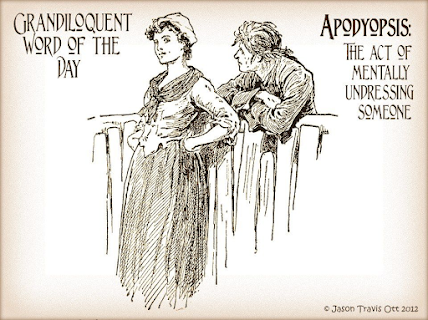
Touching a patient is one important act which a physician can perform. Although it is no longer performed in the manner pictured in the medical textbooks graphics of the 19th century (see Addendum below), it is an act which we teach our medical students all about as they learn to first experience the relationship with a patient previously unknown to them.

Touching the patient, perhaps at first as a handshake, provides the first connection with the patient. It can be represented as the marking of a beginning doctor-patient relationship which is hopefully to continue to the benefit of the patient. The quality of the handshake tells each party, at the onset, something about the other. As the patient relates the history of illness and his or her life experiences, the physician’s touch at a moment the patient demonstrates emotional distress, a touch of the physician’s hand on the patient’s arm or shoulder shows the physician is aware of the distress and is present to be supportive.

The act of touching continues into the physical examination where touching is termed palpation. Usually, the first touching in the physical exam occurs if the doctor, not the nurse, takes the patient’s vital signs blood pressure and pulse where touching is involved. It also may be the first time that the physician and patient are physically close to each other over a period of time and becomes a marker for what will continue throughout the examination to a more intimate professional relationship. Palpation is used extensively in the physical examination. Students are taught that it is important to attempt to create a warm hand to examine the patient, since the results of touch with a cold hand can be that of patient discomfort and erroneous findings. The doctor’s touch during the exam not only discovers areas of the body which are painful to touch but also the doctor learns about the warmth of the patient’s skin, its texture, moisture and elasticity. In addition, the touch can reveal whether there is crepitation or crackling of the tissues under the skin or in the joints which may represent pathology. Touch also reveals sound vibrations from the lungs or heart or masses within the patient’s skin, below the skin, in the boney skeleton and within the cavities of the body. A doctor’s touch continues throughout the physical exam and shouldn’t stop when the exam is over and a discussion of the findings and conclusion occurs. Here the light but continuing touch of a patient’s arm or hand, particularly while conclusions upsetting to the patient must be presented, can represent that the physician intends to remain in contact and supportive for the patient as the medical care begins or continues.

Simple touching can be emotionally touching for both the patient and even occasionally for the physician, however touching should be part of the entire professional actions where the intent by the physician is solely for the benefit of the patient. The issue of hugging is a more controversial aspect of touching and I have already devoted another thread to this subject.

In conclusion, as you can see, a doctor’s touch is an action which, if used wisely and professionally can provide a variety of benefits from psychological to diagnostic. Also, you can see that touch is missing when the doctor-patient relationship involves phone, video or e-mail communication. It is understandable why we who teach medical students stress touch as an important medical tool in its many ways. ..Maurice.

ADDENDUM: Graphic above and text below from Victoriana

Medicine in the 19th Century: The Touch

Classic illustration of a woman's medical exam by her doctor. Many 19th century medical textbooks used this illustration to show the proper manner to examine a female patient. The physician's eyes are diverted so he will not violate the woman's "modesty."

Sunday, July 13, 2008

Who Owns Science?

Russell Jenkins and Mark Henderson article in the UK The Times July 5 2008 and available on the TimesOnLine comments on the letter that two Nobel laureates wrote to The Times, published the same day.

The issue, as detailed in the above links, is whether science particularly science which applies to medicine and the health of human beings should “belong” to someone and all the details of the scientific investigation, the results and the applications themselves should not be readily available to all for further investigation, development and use.

The laureates, Professor Sir John Sulston and Professor Joseph Stiglitz wrote in their letter “The current system of managing research and innovation incorporates a complex body of law governing the ownership of ‘intellectual property’ — copyright and patents being the most familiar. Intellectual property rights are intended to provide incentives that encourage the advancement of science, enhance the pace of innovation, increase the derived economic benefits and provide a fair way of regulating access to these benefits. But does it really achieve these purposes? There is increasing concern that, to the contrary, it may, under some circumstances, impede innovation, lead to monopolisation, and unduly restrict access to the benefits of knowledge.”

Should medical scientific research be looked upon and treated in a way different than all other inventions or intellectual endeavors from ethical, legal and humanitarian perspectives in terms of property rights and ownership. Should the investments in time, skill and money in these projects be considered more as altruistic investments for mankind rather than the basis for future monetary rewards? What do you think? Who owns science now and who should own science? ..Maurice.

Tuesday, July 08, 2008

The Ideal Allergy Treatment in 54 Words

THE IDEAL ALLERGY TREATMENT

I could not breathe. It called for desperate measures. My mother took me to get allergy shots. I asked the doctor if it would hurt. No, he said, and offered to be shot as well. So I did it. My breathing has greatly improved. I seem to have no allergies here in solitary confinement.


This 54 word short, short, short story was written last year by me and together with two family members one of whom has allergies. It is an example of what can be expressed in as little as 55 words (or LESS like my story above), a yearly challenge to its readers which the San Luis Obispo (California) New Times newspaper has been supporting for many years.

The idea is to create a whole story with a beginning, middle and ending punch line in just 55 words (or less). It is fun but not as easy as one might think to develop a story line leading to an unexpected conclusion is so few words. Words are separated by spaces and the number like 55 as written as a digit is one word. Hyphenated words are not counted as one word but contractions like "shouldn't" are one word. Abbreviations such as USA or DNR are considered one word. The title doesn't count in the 55 words but can't exceed 7 words.

How about my visitors contributing to this thread their own devised 55 word stories about medicine, diseases, doctors, nurses.. you got the idea!? It is all for fun.. no prizes. But make it interesting.. especially that ending. ..Maurice.

What can Patients Do to Improve Their Medical Care?

We have touched on the subject of the patient’s contribution toward their own best medical care briefly on various threads in the past but now I would like to devote an entire thread to the issue. There has been a host of topics dealing with what physicians and other healthcare providers could be doing better. And I believe there is much validity to many of the comments about deficiencies and excesses in the medical profession and the need for change.

But what about the patients themselves? Again, believe it or not, medical diagnosis and effective treatment is a two way street. Beyond physician responsibilities, it is the responsibility of patients to provide the history, the cooperation with examinations, compliance with treatment and timely communication with doctors regarding treatment course and complications.

I don’t want to write more here myself. I do want to read comments from my visitors regarding how they look at the need for patient participation and cooperation in their own medical care. It's OK to present any personal examples but no names please. ..Maurice.

Friday, July 04, 2008

Medical Clichés :”A Taste of Your Own Medicine”

Ethicist Greg Pence writing in Newsweek comments about his experience with his college students’ writings which include clichés (tired,old expressions). He writes “When I grade written work by students, one of the phrases I hate most is ‘It goes without saying,’ in response to which I scribble on their essays, ‘Then why write it?’ Another favorite of undergraduates is ‘It's not for me to say,’ to which I jot in their blue books, ‘Then why continue writing?’"I also despise the phrase ‘Who can say?’ to which I reply, ‘You! That's who! That's the point of writing an essay!’" One may be critical of Dr Pence’s sarcastic responses, though his points about the use of clichés are valid. He describes a not uncommon confusing use of clichés in medical practice: “The language of medicine confuses patients' families when physicians write, ‘On Tuesday the patient was declared brain dead, and on Wednesday life support was removed.’ So when did the patient really die? Can people die in two ways, once when they are declared brain dead and second when their respirators are removed? Better to write, ‘Physicians declared the patient dead by neurological criteria and the next day removed his respirator.’”

Writing in clichés can make reading boring but speaking in clichés, I think is even worse, especially if the words are coming from your physician. I think most patients want clarity in what their physician says to them and clichés are often less than clear about what the physician is intending to convey. How would you feel about your doctor who, with a chuckle, tells you “an apple a day keeps the doctor away” or “an ounce of prevention is worth a pound of cure” or “time heals all wounds”? The problem with clichés are simply they have been used so much within so many different contexts that they lose their meaning and confuse the significance of what is trying to be expressed. Sometimes they can appear paternalistic or they can appear thoughtless. In medicine, clarity of thought and expression is essential and patients should not need to “read between the lines”.

For those interested in looking at a rather full listing of clichés that people use, go to ClichéSite. Have you been told any clichés as a patient in a doctor’s office? Write them to this blog. ..Maurice.

Saturday, June 28, 2008

MORTGAGE CRISIS AND DISEASE: STICKING TO BAD HABITS


The current mortgage crisis may be a reflection of human nature, sticking to bad habits. In the same sense, resolution or improvement of chronic medical conditions such as obesity, emphysema, alcoholism, drug addiction may likewise be affected by sticking to bad habits. Why do people stick to bad habits despite knowing they are potentially harmful? According to a study by Dr. Cindy Jardine, University of Alberta and reported in various sources including indiablitz.com, it may be that the public is undereducated in the details of why the habits are harmful and those professionals who want to break the bad habits of others need to look into the underlying social aspects leading to and continuing the habit. Failure to educate, failure to try to change the underlying psycho-social basis for the habit and what I find as the unethical promotion of bad habits will only make the consequences inevitable and likely untreatable. ..Maurice.

Graphic: Photograph taken by me June 2008 of lamp post sign.

Thursday, June 26, 2008

MISSING COMMENTS FROM PATIENT MODESTY THREAD (B)

HERE IS THE SECOND HALF OF THE MISSING COMMENTS FROM "Patient Modesty: A More Significant Issue?"
DO NOT ATTEMPT TO MAKE A NEW COMMENT ON THIS MISSING COMMENT SITE. IT WILL NOT BE PUBLISHED. ..Maurice.


js md said...
gve,
Prevaricate?? About what? You lost me there.
I'm not against asking people's preferences. In fact I agreed with it somewhere
above.
But there's no point in asking unless I can do something about it, which is rarely the
case. I have no control over hospital personnel policy and most private offices only
have one tech available.
Providing gender preferences as a routine is just not practical for most institutions
and they have no reason to push it unless they see a big demand.
Monday, October 29, 2007 6:33:00 PM

Plain Jane said...
JSMD,

I think if you will go back and read my post you will find that I said that the
statistics show that as many as 10% of the physicians are involved in sexual
misconduct (or words to that affect). I personally consider “sexual misconduct” in
the medical situation to be criminal which is why I contend that it is an assault.
The Webster dictionary definition of assault is: “a threat or attempt to inflict
offensive physical contact or bodily harm on a person (as by lifting a fist in a
threatening manner) that puts the person in immediate danger of or in
apprehension of such harm or contact”. I refuse to apologize to anyone for my
feelings of what is assault and what is not. That is my privilege as you have the
privilege of believing that physicians have the right to touch women in any context
and manner they desire.

Another point that needs to be made here, the statistics that have been collected by
research groups regarding this very issue are the ones I have used, not ones I have
pulled out of thin air. The Vanderbilt study for example.

Anonymous on October 29th, do a Google search using the words, doctor, sex,
physician, sexual, fondling, misconduct, nurse etc. The best results seem to be with
two word combinations such as “doctor misconduct” to limit the search results to
more manageable numbers. I think you will be surprised at what you find.

JSMD, snide comments about my beliefs and comments are not going to change the
facts. The medical community is in need of reform. Patient modesty, male or
female, is more important than the rights of an individual wanting to work in a
field that will allow them to see and touch a member of the opposite sex unclothed.

Plain Jane
Monday, October 29, 2007 6:54:00 PM

Maurice Bernstein, M.D. said...
KCM, you wrote "I suggest that a lack of effective oversight and discipline is an
important part of this problem. Patients are not in a position to provide this
oversight and discipline, although I will no longer remain silent when transgressions
occur."

I would say that state medical boards in the United States have very little direct
effective oversight regarding the behavior of physicians within their offices. If I was
ever monitored by a representative of the California state board, maybe it was only
once, certainly not repeatedly and I am not sure how a board would accomplish this
task for all physicians on a ongoing basis. (What happened was a "patient" came to
my office for the first time requesting a narcotic but refusing to have a history
taken or a physical performed. Of course, I didn't give him any perscription and on
thinking about the event afterwards I began to be suspicious that the man was a
state investigator.)

My point is that, in fact, monitoring physician behavior within the office or exam
room on a ongoing basis can only be the work of the patients themselves. It should
be the patients who have a responsibility to report misbehavior of physicians to the
medical boards. A couple of such separate reports about a physician should then
initiate a beginning investigation. The patient provides the oversight by their
regular proximity to the physician and the state boards provide the discipline. And
KCM..good for you that you say "I will no longer remain silent when transgressions
occur." I suggest all patients should take that stand. ..Maurice.
Monday, October 29, 2007 7:25:00 PM

Anonymous said...
amr -- I don't know to what article are you referring.

Thanks for the allnurses blog posting. I've heard too many stories of the sort told by
the nurse on this post. I wish I didn't know now what I didn't know then.

My own opinion, for what it is worth, is that it was obligatory for the nurse to
inform the patient and law enforcement about what happened. Nursing ethics also
obligated her to report the nurses involved to the State Board of Nursing. Filing a
complaint with HIPAA and JCAHO may have gotten attention. Of course, as any
whistle blower, she would have run the risk of being treated as a pariah, forced out
of her job, and black balled, as happened to Roger Bojolais who blew the whistle on
NAASA and Morton Thiokol for the Space Shuttle Challenger disaster. At any rate, I
wish I knew the hospital where the event took place so I, my family, and friends
could stay clear of it. I suspect if hospital authorities gave such behavior a wink and
a nod, there were, and probably still are, far worse things happening in the facility.

I wonder how this nurse knew that the patient wasn't harmed by what occurred. Did
she conduct a follow-up? If the providers involved had so little integrity to do what
they did, only someone living in Pollyanna land would think they would respect
confidentiality rules. To illustrate, a friend of mine received surgery at our local
hospital awhile back. Sometime following the surgery, a friend of his told him that
a nurse at the hospital was talking to her friends about the size of his testicles. He
was so humiliated that he filed a complaint with hospital authorities who dismissed
his complaint, siding with the nurse who, of course, denied everything. He tried to
get attorneys involved without any success because even if they won the case, they'd
lose money.

I shudder whenever I hear someone attribute deviant behavior to "human nature."
Unlike you, many people confuse explanation with justification and use the "human
nature" assertion to dismiss, justify, or resign themselves to the deviance. Nursing
students did just this to defend the sexual battery I described in my last post. To
contend that behavior is a consequence of human nature is to contend that it is
biogenic -- i.e., caused by biological/heredity factors (the nature argument).
Furthermore, when people assert that a behavior is due to human nature, it is
usually presented as a tautology -- human nature causes the behavior and the
behavior is used as evidence that human nature caused it. I prefer the nurture
explantion to understand the deviance of the sort described by the nurse in the
allnurses blog. I suspect that the deviance as described was a consequence of both
culture and social structure -- of cultural beliefs, values, neutralization techniques,
rationalization, etc. that licensed the deviance concomitant with the
depersonalization, impersonality, and efficiency-orientation characteristic of
bureaucratic organizations. George Annas recognized these factors in "Judging
Medicine" in which he dubbs the hospital a "human rights wasteland" writing: "Civil
libertarians have little difficulty appreciating the plight of prisoners or mental
patients. But tell the average civil libertarian that there are significant and
unnecessary restrictions on the individual rights and liberties of patients in general
hospitals, and you are likely to encounter a blank stare. There are a number of
reasons for this. One is the genral misconception that the problems are minor, or
that crertain temporary restrictions on individual liberty are essentiasl if hospitals
are to treat sick people properly. An unconscious desire not to perceive ourselves at
risk may be another reason; we seldom seriously think we will ever be either
prisoners or mental patients. But almost all of us have been hospital patients at
least once, and each of us will be a hospital patient an average of seven times
during our life. By not dealing with the issue, perhaps we are seeking to avoid
thinking about our own future hospitalization, an event which is almost always
traumatic and undesired." Personally, I don't think Annas knew the half of it; were
he an active scholar today, he might consider at least some hospitals to be human
rights abattoirs.

Regarding filming patients or their body parts for educating healthcare providers,
my experience is that one can refuse without repercussions. To force patients to
provide such a service violates AHA standards, JCAHO standards, medical ethics,
and, possibly, civil law. If the hospital posts patient bill of rights documents and
advertises that it treats patients with respect and dignity, to put patients without
their consent on display to benefit others may be construed to be a contract
violation. And, to demand that patients provide such a service without
remuneration of some sort is patently exploitative.

What is particularily odious to me is a hospital inviting in a film crew to film
patients in emergency rooms and emergency vehicles without their consent. For
physicians, nurses. and hospital administrators to provide film crews with
information about patients and to give them access to patients' bodies without
patients' consent are obvious breaches of confidentiality. I used to prepare
healthcare facilities for JCAHO accreditation visits (when it was called the Joint
Commission for the Accredation of Hospitals). Back then, a facility would not be
accredited if it breached confidentiality in this way. The only case I know in which
such a breach was litigated occurred before the California Supreme Court. The case
is Ruth Shulman v. Group W. Productions, Inc.

I appreciate your call for research to answer the questions you pose. Unfortunately,
those who are interested in doing such research may not get approval for doing so,
especially if they are not physician researchers. About three years ago I wrote up a
research proposal to replicate with osteopathic students a study on ethical behavior
and beliefs done with allopathic students. My proposal passed muster with my IRB
but one individual at the osteopathic school made a unilateral decision to refuse me
access to students in classes. His refusal was not based on anything unethical but on
his impression that people in medicine never do things like that, this in spite of the
fact that I referenced everything. With the help of a faculty member at the school, I
was, nevertheless, able to conduct the research via e-mail. However, the response
rate was so low as to preclude generalization. Ironically, my analysis resulted in
findings favorable to osteopathic students. However, the most frequent response I
received was that physicians never do things like that.

js md -- You wrote the following: "When you contrast those percentages [4% to 12%]
with the percentage of married couples who have had 'illicit' affairs, somewhere
between 30-50%, it's hardly surprising." In other words, using the figures you give
(and assuming you're correct when you write, "these were consensual relationships,
not a legal assault in any way") the likelihood of American citizens having affairs is
between 2.5 and 12.5 times greater than having "consensual" sex with physicians.
Why else would one use this comparison unless it was to demonstrate that sexual
misconduct of the sort referenced in the Vanderbilt study was relatively rare?
However, although comparing adulterous affairs with the latter is not quite as
preposterous as "comparing physician sexual improprieties with criminal assaults,"
it comes mighty close. Again, the more apropos comparison would be with the rate
of "consensual" sex among those in occupations where power imbalances exist.

You also write, "So in short you are in very little danger of a sexual assault in
medical surroundings unless it is consensual." You may be correct, but this
conclusion is a nonsequitur; it does not follow from the facts you present nor from
the study cited by Vanderbilt unless one assumes that the latter included acceptably
valid measures of all types of physician sexual misconduct rather than only sexual
relations agreed to by patients.

In your Sunday post, you wrote, "It's hard to come up with a more feasible
methodology." I assume you are referring to the self reports cited by Vanderbilt.
Again, victimization reports have been shown to provide more valid measures than
self reports for determining rates of victimization and risk to citizens.

You also write, "Criminal prosecutions are rare as they should be IMHO [I don't know
what you mean by IMHO]. Most states do not criminalize these transgressions and I
suspect that felony convictions are rare even in the states that do. These are civil
regulatory offenses for the most part." If you are writing about what you dubbed
"consensual" sex, then I have no quibble. If you are suggesting that the dearth of
prosecutions and convictions is an indicator that few criminal sexual violations
occur, then I must take exception. A number of writers to this blog, the example I
gave (and I have many more), and the recent allnurses reference are all examples
criminal statute violations in Missouri. Some, at the very least, violate Missouri's
invasion of privacy law (565.253) which reads, in part, "A person commits the crime
of invasion of privacy if he knowingly views, photographs or films another person,
without that person's knowledge and consent, while the person being viewed,
photographed or filmed is in a state of full or partial nudity and is in a place where
he would have a reasonable expectation of privacy" (MRS, 1995: 228). These laws do
not exempt healthcare providers. And, that they are not reported, prosecuted, or
lead to conviction do not make them any less a crime.

Finally, you write, "I'm not sure . . . that your assumption of misconduct is greater
when intimate exposure is present is correct . . . There is evidence that the
incidence of offenses is greatest in the field of psychiatry where there is no
exposure." Mine was not an "assumption" but a hypothesis grounded in opportunity
theory and differential association theory. In other words, I presented an empirical
question -- one that demands to be tested. Regarding the rate of offenses in
psychiatry, I think we are speaking primarily about what you call "consensual" sex,
which results from, I would propose, the exploitation by psychiatrists of patient
transference. I mean to include all forms of sexual misconduct in my hypothesis.
Findings resulting from a test of the hypothesis could be just as significant if the
hypothesis were rejected, confirmed, or found to be contingent on other variables.
c. ray b.
Monday, October 29, 2007 9:07:00 PM

Anonymous said...
I believe quite a few of us gathering here are beginning to ask ourselves, "What
does Plain Jane want?" Let me take a shot at answering this.

Jane believes she has a right to same-gender care beyond the provisions for it that
already exist. If she should ever find herself with a male doctor, nurse, or med tech,
chaperones of her sex are not sufficient protection as Jane needs to be shielded
from what's potentially going on inside the male mind. She views this is very logical
and calls thoughful comments by a male physician, "snide". Jane never pays any
attention to the fuller or more immediate issues. She never acknowledges anything
regarding the double-standard in patient modesty care stacked heavily against men
and could care less about the behaviour of female nurses who, in their
overwhelming numbers, are probably committing common battery against male
patients at the rate of a thousand-to-one over sexual "assaults" on females by male
doctors. She brings a myopic point of view here and is angered when told to put her
complaint into perspective with the bigger picture. Jane, the help you need with
this problem isn't going to be found here.
-- CHUCK McP
Monday, October 29, 2007 10:08:00 PM

amr said...
Dr. B – I do not believe it would be good to not publish anonymous entries –
although having a idea of how many people are contributing is of value.

JSmd – Oct 29 – On a few occasions now you have seemed to want to downplay the
possible scope of the problems. Because you haven’t heard about it in hospitals you
have been at, doesn’t mean that it doesn’t happen in those very hospitals. It could
merely be that you have not heard about it.

It was only because my wife’s 1st surgery failed that I even would be here today
talking about these issues on the web. It was never on my radar screen. Now it is,
and frankly, I could have easily lived the rest of my life not knowing what I know
now.

Voy: There was a point where I thought the voy blog entries were suspect. Now, I
believe they are, in a more “earthy” manner, representative of the modesty
conversation going on here and as represented in allnurses. BTW, the “stories”
although from nurses, show some very unprofessional behavior. I’m afraid that the
population that is attracted to nursing and the $$ paid for the work and
responsibility, is not the greatest.. I do not want to single out nurses however. I
believe the transgressions are made by a cross section of those in the medical field
caring for patients.

Here are some links. If memory serves, mention of this blog was made at some
point.

Voy 1

Voy 2


C Ray B –

IMHO = In my humble opinion (its blog short hand)

I’m referring to the piece you wrote that was published by Dr. Gott that you
mentioned in your blog entry of Friday October 26.

Filming: It might violate standards, then institutions such as UCLA have figured out
how to get a variance from those standards. The whole field of tele-presence and
using cameras in the OR suite to manage the case flow, where the feeds go to a
central location, or can be called up on the internet, are becoming prevalent. So
without the consent up front, the institution is refusing to treat. The consent is
hidden in the legal document a patient is required to sign on admittance to the
hospital. It is the same kind of justification for non-consensual pelvic exams – well
the patient signed the release, so it must be ok. As far as the bill or rights are
concerned, nowhere in the published bill of rights for UCLA does it say that a
patient may refuse being photographed or videoed. The reason being is that they
FORCE the patient to give up those rights as a condition of treatment. With the
new OR suites with internet and video streaming, there is more $$ incentive to
make sure the patients modesty rights are abrogated for the benefit of the
institutions bottom line. (By the way the UCLA release in my view would protect, or
bypass, the Missouri privacy law, as I suspect it bypasses the similar law in CA as it
pertains to filming, including in the OR, where we have clearly established that the
patient is as some point in a state of full or partial nudity. It should not however
protect the hospital against the behaviors we have been discussing.)

I agree with you about the film crews – if it happened to me or a member of my
family, I would sue.

Research paper: I am EXACTLY suggesting that this study be done by physician
researchers. I remember reading a book 30 years ago (?) about a surgeons 1st year
as a resident. In that book at some point, I remember him talking about comments
about patients breasts in the OR. This treatment of patients has gone on for quite a
long time, if not forever. The question I am asking is one that Dr. B has postulated
(and JSmd), how wide spread are these issues? How do we begin to asses this unless
we start somewhere, formally?

-amr
Monday, October 29, 2007 11:28:00 PM

Anonymous said...
JD here (just so I don't forget) The issue with filming, the one experience I had with
it, that I know of sheds a little light on an issue that goes throughout the medical
system. I was in for surgery, I was on the table, IV in, only in a gown, all the stuff
rolling and a nurse comes in with a clipboard full of consent forms, this is consent to
provide, etc. and matter of factly goes through the forms and hits on the is consent
to film...I froze up a little, the nurse noticed my hesitation and said its just a
formality they almost never do it, I signed it and have regretted it ever since. The
issue here is to wait until that point puts the patient in a position of making these
decisions in a state of elevated stress and anxiety, I was already stressing over the
procedure, over the prep, the stupid gown I was in....in business you can contest a
contract signed under duress...yet in medical care it is acceptable. This issue runs
parrell to the issue of who is primarily responsible for patient modesty and more
specifically, determining the level of concern. Everyone knows patients are
intimidated and have a problem stating their concerns, it has been stated numerous
times patients tend to suffer in silence...if providers know this, and choose to
ignore or not take positive steps to address it, even though they are in the position
of power in a relationship that is widely acknowledged as being unequal....is this
not a problem on the providers side? I think it is mainly an issue of convenience and
this is the way we always do it, providers don't want to create a situation they have
to deal with, so they just pretend it doesn't matter. JD
Tuesday, October 30, 2007 5:41:00 AM

Maurice Bernstein, M.D. said...
JD, I would never, never sign any document while lying on the table in the operating
room. All the papers are part of the informed consent and yes you are under duress.
And more than that..you actually may have already been given a pre-op sedative
medication and are under its effect. I am not a lawyer but in my opinion you can't
possibly meet any legal standard for informed consent under these circumstances.
Just don't sign it and request to speak with the hospital administrator.
..Maurice.
Tuesday, October 30, 2007 7:54:00 AM

gve said...
jsmd,

what I am saying is why do YOU not gather some evidence of your own? The fact
that you cannot change anything does not stop you gathering the evidence, you
could at least inform yourself with the reality of how people feel.

Publish what you find IN HERE, prove us all wrong, but at least ASK!
Tuesday, October 30, 2007 11:09:00 AM

js md said...
c ray b,
Thanks again for your thoughtful comments. I'm not sure we really disagree about
anything significant. I am using the term criminal in the narrow sense of one who
has been convicted of a crime that exposes the perpetrator to incarceration, which
usually means a felony. There are much more general uses of the term which I think
others are using.
amr, I of course know that my not being aware of an adverse event in the hospital
means it didn't happen. No hospital would want to publicize these events. Likewise
it doesn't mean it did happen, though there might well be enough talk about it that
I would have heard about the incident.
There are several much worse exchanges on voy from supposed nurses who abused
their trust and invited others in to see a patient or talked about them openly by
name. I have no way of knowing if they are real though I would say the posters did
seem knowledgeable about nursing in general.
Tuesday, October 30, 2007 12:51:00 PM

amr said...
Chuck McP – Oct 29

The issue of modesty is a continuum. And it is situational as I have mentioned
before. It is not just the nudity that is at issue, but it is also the issue of feeling
safe and cared for. It is difficult sometimes to separate the message from the
messenger. Plain Jane might appear very impassioned, in her point of view, but it
is on the continuum as far as the desire for modesty and same gender care. If she
has had an experience where she has been hurt by a male provider, I can see where
she would be coming from. Her issue is modesty as well as needing to feel safe.

It is the case that it is very hard to prosecute doctors for misbehavior, so I can see
her point that the system is rigged in the favor of the doctor not the patient. If that
is the case, then an oz of prevention is better than a pound of cure. But patient
abuse (modesty violations, etc) occurs by both male and female providers. So if it
were the case that society provided the method where all health care professionals
were quickly held accountable, then the threat of being disciplined would, by its
very nature, help to mitigate the situation, and the feeling of helpless on the part
of the patient would be lessened. When you do read stories in the paper about some
doctor being prosecuted, I have never read one where it is suspected that it was the
doctors first offence. If sorting out the “bad apples” were only easy…..

When I was at my low point with all of my modesty issues regarding my wife and
her illness, I was saying a lot a sweeping things about doctors in general. At one
point, my wife pulled me up short by reminding me that her father, brother and
sister-in-law were all doctors, and that medicine has kept her father, my farther,
her brother, her son – alive and it good health. I was being personally offensive –
though she understood where my heart was. So I can understand and appreciate how
“violations” can cause very strong emotions. I believe I had a form of PTSD, which is
hard to deal with.

Labeling all of some category is prima fascia wrong, and perhaps is the issue that
caused the strong comments against Plain Jane.

--- amr

ps. What’s wrong with me – I have no links to post…. ;-)
Tuesday, October 30, 2007 1:05:00 PM

Anonymous said...
amr -- Thanks for telling me what IMHO means; I think I figured out what PTSD
means; post-traumatic stress disorder. Right?

Dr. Gott's publication was on December 12, 1994.

I think I'm getting stupid or stupider; I'm having a difficult time visualizing what's
going on at UCLA. Are there cameras in the OR -- sort of like surveillance cameras -
- that capture all that goes on in the OR? If so, are the films made used only to
educate healthcare students or are they available to all on the Internet? And, if a
patient crosses out the consent to be filmed section of the legal document about
which you write, s/he will be denied OR service except in emergencies. Am I
correct? Will the patient also be denied service in other hospital departments if
s/he doesn't accept the invitation to be filmed?

My own experience is that hospitals use duplicity and guile rather than coercion to
ensure that patients sign away their rights. They train receptionists to tell the
patient that the document you are to sign "gives us permission to contact your
insurance company and gives the physician permission to treat." A cursory reading
of the document, especially in teaching hospitals, usually reveals that the patient is
signing away one or more rights as well.

The emergency room and emergency vehicle intrusions tend to be different from OR
intrusions. Unlike the latter, hospitals cannot obtain patient consent (nor loved
ones' consent) to film in emergency situations. Nevertheless, a day doesn't go by
that one cannot see patients on "Trauma: Life in the ER" being filmed without their
consent while they are stripped naked and catheterized. Group W. Productions, Inc.
got into some trouble when Ruth Shulman took exception to being displayed in front
of a camera person and ultimately on television without her consent. Personally, I
believe the emergency helicopter company should have been sued in addition to or
in lieu of the film company. At any rate, the CA Supreme Court decided that
Shulman had a reasonable expectation of privacy while in the emergency vehicle.
Ironically, the court also decided that what happened to Shulman was newsworthy,
so Group Productions did not violate her rights by airing her story without her
consent but did violate her right to privacy by filming her in an emergency vehicle
without her consent. The case was remanded back to a lower court with these
words, "Defendants . . . took calculated advantage of the patient's 'vulnerability and
confusion.' Arguably, the last thing an injured accident victim should have to worry
about while being pried from her wrecked car is that a television producer may be
recording everything she says to medical personnel for the possible edification and
entertainment of casual television viewers. [A nurse recored a conversation with
Shulman without her knowledge while she was pinned in an automobile.] For much
the same reason, a jury could reasonably regard entering and riding in an
ambulance -- whether on the ground or in the air -- with two seriously injured
patients [She was with her brother.] to be an egregious intrusion on a place of
expected seclusion."

Regarding nonconsensual filming of patients, I had an interesting exchange with
Johns Hopkins CEO Edward Miller and its president Ronald Peterson. Prior to the
airing of ABC's "Hopkins 24/7" the two of them posted the following on the Internet:
ABC film crews were "granted . . . unhindered access" to Johns Hopkins Hospital
"virtually around the clock, over a three month period." At the same time, Miller
and Peterson asserted that, "First and foremost, you should know that even though
we had no right of review of what ABC taped, we and ABC were exquisitely
sensitive to issues related to patient privacy and confidentiality. As you watch the
programs, keep in mind that we insisted upon and secured absolute protection of
our patients' privacy at all times. We required ABC to obtain written consent from
any patient appearing in the broadcast." Now, usually I don't attribute to malice
what can be explained by stupidity, but I'm not so sure in this case. It didn't add up
that ABC could be given "unfettered" access to "private corners" in the hospital for
three months and, at the same time, not intrude on patients' privacy. Somebody
was speaking with a fork in his tongue. So I wrote to both Miller and Peterson.
Miller wrote back, "You are correct that the patients did not give permission prior
to being filmed" in the emergency room episodes. And Peterson equivocated when
he wrote, "Even in the Emergency Room, consent was obtained in advance whenever
possible." Of course both bypassed my question about film crews viewing patients in
the emergency room who were not filmed. So much for being "exquisitely sensitive
to issues related to patient privacy and confidentiality."

Dr. B., I have a couple of questions for you. A preface first. You've frequently
mentioned your efforts to sensitize medical students to the dignity and privacy
needs of patients, a noble gesture which is greatly appreciated. Most nursing faculty
whom I know do the same. However, most of the people in the field with whom I
speak contend, in effect, that a resocialization process begins almost immediately
when they begin to practice. They, in short, internalize a set of beliefs, values, and
norms antithical to their academic instruction and ethical codes. Some of them
even pick up and use pejoratives they were taught to eschew while in school,
pejoratives such as GOMER, GOMERE, F.L.K., AMF, crispy critter, M.U.O., worm,
and the like. Use of these terms demonstrates the contempt they have for patients
and help sanitize subsequent dehumanization of patients. Do you anticipate this
resocialization and do anything you think might reduce its likelihood? Do you ever
casually or formally follow up with students to find out if your instructions have
stuck? c. ray b.
Tuesday, October 30, 2007 9:04:00 PM

Anonymous said...
In the last few days, a couple of incidents appeared among the postings here that I
feel need special re-focusing.

Thanks to c.ray b.(Oct. 26, 8:22 AM) for the first of these and AMR for the
latter(Oct. 29, 12:29 AM). I'm sure c. ray had one of his "very negative viceral
responses" when he encountered the first and AMR assures us that the second event
"turned his stomach". You can go back to the original posts and their links to review
what happened but I'd like to rework the scenarios with a simple gender swap to see
how they play out. (Thanks in advance to c. ray b. for letting me borrow
his passage for the experiment.)

"Several years ago, I gave a presentation to a nursing ethics class on the ethical
treatment of patients. The professor, who was very credible, reported that he and
several other male nurses were preparing an anesthetized woman for surgery when
one of the guys pulled on the woman's labia, stretched it out, and commented on it's
length and size. The class of males responded in the same way as the other male
nurses who were preping the patient; they broke out in laughter. I asked the
professor if he reported the incident. His response was 'no'. Following the class
period, several of the male nursing students, who had been practicing LPNs for
some years, approached me and defended the battery as being a legitimate
response to stress."

Now, a gender adjustment to an allnurse.com blog entry. It involves the experience
of a male nurse with two years on the job.

"A few nights ago, a young woman patient came to our MICU on a vent... since all
her clothes had been cut off by ER, she was exposed. Her vagina was quite large,
honestly. One person made a comment about... I thought that would be the end of
the situation. Nope. A few minutes later... about 8 male nurses aides, RTs, etc.,
came in to "see it". The male nurse taking care of the patient LET THEM LOOK!...
And, that wasn't even the end. A group of the guys, nurses/aides/RTs, were out in
the hallway talking about it and laughing... people were coming in and lifting up
her gown and stuff..."

So what kind of advice does this troubled male nurse get from at least one of his
fellow male nurses?

"Poor newbie. Don't go run around and tattle on your co-workers...the patient was
not harmed in any way. This type of behaviour has been common in every OR, ICU,
and ER I've worked in for the last 21 years."

I would like to suggest that if the genders of patient and nurses had been reversed
as I have just demonstrated, these two incidents would not have ended up as
internet blog fodder but as pieces of investigative journalism in some national
magazine. The double standard in all aspects of male patient modesty is quite
sickening. WJB
Tuesday, October 30, 2007 11:14:00 PM

Maurice Bernstein, M.D. said...
c.ray b., Ahh! You have touched on the issue that perplexes those of us who teach
first and second year medical students clinical medicine, humanistic behavior and
professionalism. The problems start in the third and fourth years and goes on thru
internship and residency and that is (as I have discussed on previous threads) the so-
called "hidden curriculum". In the first and second years, the students have no direct
responsibilities regarding the diagnosis and treatment of the patients they take a
history and perform a physical. They usually spend 1 1/2 to 2 hours with the
patient. However, as they move up in the medical education chain, things change.
They have far far less time to do a history and physical, they have more
responsibilites to their now many patients and they are guided in their training by
different "role models" than those physicians who taught them in the first two years.
These physicians are senior residents and attending physicians who may have lost
some of their ethics training or humanistic behavior (or never learned them) and
the students or interns are faced with following their guidance even though in
conflict with what we have taught them or being graded down or worse.

Fortunately, medical schools are aware of this hidden curriculum
but it would require substantial changes in the medical education system to remove
it. What we are doing as facilitators is to warn the students about the upcoming
potential of a hidden curriculum and trying to provide resources for the students to
turn to if they find they are being pressured into behaving wrongly because of their
poor role model superior's demands or examples. ..Maurice.
Tuesday, October 30, 2007 11:35:00 PM

js md said...
c ray b,
You have shocked me, and that's not easy to do. I have always assumed that all
these ER shows (which I've never watched) obtained specific permission before
filming. Hard to believe that they don't and can get away with it. Your tale about
Hopkins is frightening.
Unfortunately HIPAA is mostly about medical records and bills and doesn't
specifically address issues like this to my knowledge. It needs to be amended to give
more protection to direct patient encounters. At the very least permission to take
photos should be required to be obtained separately and not buried in a general
form. I may in fact write my congressmen about it. If I do I'd like to quote your
post. If you object let me know. You can do so thru Dr. B. if you prefer.
BTW (by the way) if you google any common abbreviations their meaning will pop
up quickly.
Wednesday, October 31, 2007 8:43:00 AM

amr said...
C Ray B – Yes you got ptsd…

WRT to cameras at UCLA, I attempted to cross out that section of the contract for
my wife’s 2nd surgery. We were told by the director of admissions that the contract
cannot be changed, and no lines could be crossed out. If we could not sign the
contract as is, then my wife would not be admitted. In calling our Dr. he assured us
that no filming or pictures (or camera feeds) would be done. The new hospital being
built at UCLA will have full AV in ALL of the operating rooms. This includes several
camera placed around the OR that can be remotely controlled.

Here are 3 representative links and articles

University Hospital in Alabama

One maker of OR suites and the AV equipment that makes this all happen

UCI New Release about new OR suites 2003

This process has been going on for about 7 years now – all new hospitals being built
will have this technology to remain competitive. In the ORTV site, you will see how
extensive the invasion of the OR has become. You will see pictures of auditoriums
full of people watching operations as well as a full discussion of how the operations
can be recorded and work can be posted on a web sharing site.

What isn’t said is that non-medical geek techs are now a part of the process. They
can dial in an OR to see what is going on. The cameras are not turned off – so a
patient when fully exposed will be visible to anyone dialed into the OR from
anywhere in the world. These streams can be captured on the receiving computer. If
you think it is bad that health care professionals make comments or inappropriately
touch patients, this is absolute remote voyeurism. Being in the computing business
all of my professional life, I guarantee you that this sort of thing is now going on
every day.

Although UCLA new hospital is not on-line, some of the OR’s in the current main
hospital have cameras that can be remotely accessed by a Dr. from anywhere in the
world. Thus, the techs that support that function also have the same access.

WJB: The abuse does in fact cut both ways. There is a voy entry that speaks to a
young college co-ed going to the university hospital for an appendectomy. She had
extra large vaginal lips that she was self conscious about. Apparently, her female
nurse would bring in male “people” into her hospital room to gawk at the girl.

So, this stuff goes on, and it probably is going to get worse with the ability to
remotely gawk at patients. What can be done to bring national attention to this
issue? The lobbyists are hard at work as we speak working on behalf of the medical
companies internationally. This is BIG BUSINESS.

-- amr
Wednesday, October 31, 2007 10:08:00 AM

Anonymous said...
amr -

Of course, the abuse cuts both ways. I'm just saying that the
number of incidents where the male is the victim is hundreds to one over the
incidents where the female is the battered party.

Your example is not the best one
to support "abuse cut(ting) both ways". Here we have a FEMALE nurse running the
show. I doubt it would have gotten started if she wasn't hawking the tickets to show
this girl's extra large vaginal lips.
-- WJB
Wednesday, October 31, 2007 12:53:00 PM

Anonymous said...
it is not important whether abuse or battery happens more to males or to females
the point is it shouldnt happen at all. This is disgusting and every person in the
room who knows this behaviour is going on should be prosecuted. Those who know
and do nothing are just as guilty as those doing it. Until medical staff stand up for
thier patients nothing will happen. Is it any wonder people like me are fast turning
against the medical proffession as a whole.RM
Wednesday, October 31, 2007 3:33:00 PM

Anonymous said...
It's absolutely important that we note that this disgusting behavior is happening
more to men than women because men have far less protection against it. The
vast majority of the nurses, med-techs, and admin staff, who are the backbone of
this patient battery, are female and the target is most often a man. The sisterhood
protects its own. WJB
Wednesday, October 31, 2007 4:01:00 PM

amr said...
WJB – I shortened the story, she was actually “viewed” by males first in the hospital
as a part of her acute phase and surgery. They spoke about it in the snack room,
then once she got to her hospital room, the hospital workers (nurse etc) started this
process. The male and female nurses were willing participants in the “fun”. In fact,
some may not have been nurses per se.

Girl Friend – Appendix

As far as your comment about males being abused over females more, a “violation”
can only occur if the male wants / requires modesty. Each patient should be
approached with that assumption. However, it is not true that all patients (male or
female) are concerned about modesty. If the concern is not there, then there can
not be a violation.

JSMd – Oct 31 – Now you are talking !!! (about the congressman) HIPAA has never
been about patient “bodily privacy”. And neither is the hospital and especially not
in the OR. Whenever I have spoken to Drs about this issue of “privacy”, I get blank
stares, and the reference is always made that the patients ID is always protected.

I do want to underline however that the basic technology changes happening in the
OR are really neat, and this is a huge train that has already left the station. There
is no question in my mind that the ability to train future docs, confer with
specialists, and having patient data available quickly, are all outcome benefits that
cannot be denied . But it is equally true that camera and video feeds are simply
trampling upon patient privacy and modesty rights. If the patient were awake in the
OR, medicine would never be able to take advantage in this way. Further, without
outside limits being placed upon medicine, this trampling of our rights shall
continue.

JSMD, I think that you will find that the lobbyists are already hard at work to make
sure the interests of the hospital comes before the privacy / modesty issues of the
patient.

If….. the patient was truly given a choice to opt out, by an explicit informed
consent that they could sign “NO” and still get treated, AND the hospital respects
the “NO”, then I would have absolutely no problem. However, as you can see by the
U of Alabama link, there is a room full of video feeds being monitored, with people
just walking on by a huge window into the monitor room. There was no attempt
made obviously to even make the monitor room private. The rational is that the
room is already in a private part of the facility so within that part of the hospital,
it can be “public”. Well, what business is it of those that are just walking by for any
given case to be on display for them to see, even casually.

I have another link of a study where the monitors are placed in the doctors lounge,
where all sorts of people gather, including medical sales reps.

With the monitor room on “public” display in both examples, it is simply a concrete
example of how these hospitals simply give no consideration to patient modesty
within the OR suite. Simply put, the purpose of the monitor room is to increase OR
through put (get more surgeries done) because the OR is a big profit center.

So taking the U of Alabama as an example, if a patient refused to have cameras on,
what procedure could be put in place so that the patient’s rights are protected.
Being very cynical here, there is no way a patient, even if they opted out, could in
fact be assured that their wishes were met. The more these systems are put into
place, the more institutionalized the problem is going to become.

So, JSMD, I would submit that if the hospital has no problems putting these systems
in, where the patient is monitored anyway, then having an outside camera crew
come in (for the hospital to make more money) is already on the slippery slope, so
why not; come on down folks, have a look at our sick and dying patients, after all,
we do protect their “privacy”.

Ahhh – that felt good…. ;-)


-- amr
Wednesday, October 31, 2007 4:13:00 PM

Plain Jane said...
WJB

You said that males are victims of medical abuse hundreds to one as compared to
women. Would you clarify more what you mean please?

Unfortunately abuse of both genders happen. This abuse is unacceptable for anyone,
regardless of gender. One of the reasons that male abuse is not as recognized as
medical abuse towards women is that men are more reluctant to share "those" kinds
of stories with others. It is becoming more recognized and that is a good thing. My
husband has agreed to only have male caretakers when he needs any kind of medical
treatment. Of course, this could mean that we have to be a bit more creative in
getting adequate care for him. This pact with my was before I became active on
this blog.

Plain Jane
Wednesday, October 31, 2007 8:30:00 PM

Anonymous said...
I hear you loud and clear, RM. And, I agree with you but, at the same time, I also
disagree with you that "it is not important whether abuse or battery happens more
to males or to females." Patient abuse and battery by those in the "helping
profession" have moral/ethical, legal, social, political, and economic ramifications.
Morally/ethically/legally, few would quibble with your assertion, "the point is it
shouldn't happen at all." However, that males are at greater risk (assuming that is
true) may be important socially, politically, and economically. To illustrate, I plan
to allert my cousin's husband to what has been communicated on this and other
blogs and to the research that has been done on the subject. He is an investigative
reporter responsible for uncovering, among other deviancies, the sexual abuse of
women at the airforce academy in Colorado. At one time, he was a member of the
team on "West 57th Street" a CBS program long since taken off the air modeled
along the same lines as "60 Minutes." He is, unquestionably, a no-nonsense type of
guy. Were he and/or other investigative reporters to know that males are at
greater risk than females, he would also know where to focus his investigation in
order to maximize the likelihood of uncovering provider miscreance. Similarly,
were he to know in what hospitals abuse and battery were most likley to occur, he
could focus his attention on those hospitals rather than taking shots in the dark.
The more information one has about a phenomenon, the more likely that person
will be able to measure it, observe it, establish its causes, and act to ameliorate
the problem.

My sister runs a domestic abuse shelter. I'm sure she would agree that it's not
important whether abuse happens more to females than to males, the point is it
shouldn't happen at all. However, knowing that it is much more likely to happen to
females than males has led her to organize the facility she runs more for females
than for males, although she also provides accommodations for the few males that
seek the program's help.

Thank you amr -- a disturbing report, indeed. I will phone the quality control officer
at UCLA and an authority at the Joint Commission to find out what they have to say
about the matter, if anything. Depending what I find out, I will alert my cousin's
husband to the matter as well. Your state representative might also be interested in
your experience and what's going on. Our political leaders often obtusely cover their
eyes, ears, and mouths unless they perceive themselves or their families as possible
victims of norm violations. For example, apparently Missouri Senator Sam Gaskill
was humiliated because he was compelled to wear the ubiquitous gossemer-like
hospital gown. So he introduced a "Dignity Gown" bill (HB 128) designed to require
hospitals to give patients the option of a more substantial gown. Of course, the
lobby efforts of the Missouri Hospital Association kept the bill from going anywhere,
but at least he got the attention of hospitals some of which now provide gowns that
allow patients a modicum of dignity.

js md - You don't need my permission to quote me but you have it anyway.

I studied HIPAA standards right after they were implemented. That was a few years
back and I've forgotten most of what I read. But, I do recall at the time that I too
got the impression HIPAA focuses on privacy of records although some of what was
written I thought could be construed as referring to personal privacy. My impression
was that to deliberately communicate to members of film crews (or anyone else not
involved in patients' care and treatment) information in patients' records without
patients' consent violated HIPAA standards. It was also my impression that exposing
members of film crews to patients' naked bodies without their consent could be
construed as being an illegitimate communication of private information about the
patient. A document that promises patients privacy but does not encompass the
latter in its conceptualization of privacy would be a strange document indeed.

There is no question in my mind that patients who are unconscious or DOA do not
give their consent before being filmed. There is no question in my mind that film
crews in the ER sometimes film people who don't give their consent to broadcast.
There's no question in my mind that members of film crews, by virtue of their mere
presence in the ER, sometimes observe patients, without their consent, in various
stages of undress but never film them. In their e-mails to me, Miller and Peterson
conflated consent to film and consent to broadcast, justifying the former by pointing
to the latter. If one assumes that to film someone without prior consent is as
privacy right breach, then Peterson and Miller were suggesting that it is acceptable
to violate people's right to privacy if after you have done so, you ask them if it was
alright that you did so and they respond affirmatively. Of course, if ER patients are
asked to consent to being filmed by someone with authority, it would be
reasonable, if not advisable, for them to do so whether they want to or not.
Ironically, physicinas on the Hopkins program made my case for me. One observed,
"We see patients in their most desperate situations." Another proclaimed the
following about ER patients: "They're scared. . . They're willing to do just about
anything we ask them to do. . . They're afraid they're going to die."

I should add that the Hopkins program premiered August 30, 2000 and ran until
September 27; that was before HIPAA was implemented I think. I e-mailed Miller or
Peterson (I can't remember which) after HIPAA was implemented about his opinion
of the Hopkins program in light of the new HIPAA standards, but I never received a
resonse.

At a risk of being ad hominem, my impression of both Miller and Peterson is that
they would have prospered as Nazi concentration camp wardens. Their statement on
the Web and communication with me was full of self-serving platitudes and revealed
how oblivious they were to the inherent contradictions and convolutions in their
reasoning. Peterson revealed a chilling perverseness by commending parents for
putting their child -- a victim of sexual abuse -- on public display. What kind of
parents would display their abused children to public scrutiny and what kind of
people would commend them for doing so? Were these parents to have voluntarily
spread the news of their child's abuse outside of a hospital's sanitizing milieu -- had
they spread the news in their community, for example -- people of principle would
have probably viewed their actions as barbaric and contemptuous. And, Miller
defended Johns Hopkins following the death of Helen Roche in that facility. Roche, a
24- year-old healthy college student, had accepted $365 to participate in an
experiment on the effects of irritants on healthy lungs. Following Roche's exposure
to the irritant hexamethonium, she began to cough and experienced shortness of
breath. She was dead within weeks after her lungs failed and her kidneys ceased
functioning. The Office for Human Research Protection (OHRP) temporarily
suspended all human-subject research at Johns Hopkins Medical Center for failing to
follow proper ethical guidelines. The OHRP found that Hopkins' physicians had not
obtained readily available information about the relationship between
hexamethonium and lung toxicity and had ignored the warning that it was for
laborastory use only. Furthermore, the consent form signed by Roche incorrectly
described hexamethonium as being a "medication," failed to indicate that
hexamethonium was not approved by the FDA, and did not warn participants about
the connection between hexamethonium and lung toxicity (Begley, Sharon and
Donna Foote. 2001. "Trials and Errors." Newsweek. (August 6): 38-42.) In response
to OHRP -- rather than admitting to, apologizing for, and expressing remorse over
Hopkins' mistakes -- Miller cavalierly dismissed Roche's death with these words:
"Hopkins has had over 100 years of doing clinical trials. . . We have had one death
in all of those years" (Begly, Sharon. 2001. "Dying for Science." Newsweek. (July
30): 36)) I must confess, although I am a peaceable man, I shudder to think what I
would do were Roche my child.

WJB -- You may very well be correct. The people with whom I've casually spoken to
about the matter agree with you. So I thought I'd test out the hypothesis that people
would judge male healthcare providers who behaved inappropriately more harshly
than female providers who did so. I created a scenario of abuse, held everything
constant except the sex of the provider, and randomly assigned the two
experimental conditions to 28 students. Surprisingly, there was no significant
difference in the harshness of students' judgements of the male and female
offenders. However, I did have an open-ended question which revealed that students
appeared more suspicious of the male provider's motives than the female provider's
motives.

Although experimental in nature, this was a quick and dirty study which amounted
to no more than an appetite wetter. Given the time and inclination, I'd like to do a
more thorough study with a larger sample from the community instead of limiting it
to students at the university, increasing the number of scenarios organizing them by
seriousness of infraction, and establishing the levels of validity and reliability of the
instruments used. -- c. ray b.
Wednesday, October 31, 2007 10:37:00 PM

Maurice Bernstein, M.D. said...
c.ray b, I am very pleased that you have available contacts that can help obtain
information and perhaps unpublicized details regarding the various aspects of the
patient modesty especially in the hospital environment. In addition, that through
your actions you may be able to initiate investigation into aspects of hospital
and/or employee behavior that has been of concern here. Your presence on this blog
may change simply gripes into something more constructive and hopefully more
effective to solve these concerns.

By the way, I found an interesting article in which hospital video/audio study
apparently utilized with the specific permission of women in labor demonstrated the
lack of concern for the woman's modesty in addition to other poor practices
associated with the repeated vaginal exams clinically indicated during the labor
process. The article,"An observational study using audio-video recording to assess
care given to vaginal examinations during labour" by Hayward, Harris and Greene
was published in the Journal of Obstetrics and Gynaecology v.23 issue 2 Supplement
March 1 2003.
The Abstract follows:

Vaginal examinations are intimate and potentially embarrassing experiences,
particularly so during childbirth, where they are a common procedure. Few
investigations of vaginal examination procedures in labour have been undertaken,
yet it carries risk of emotional trauma and infection, a potentially avoidable cause
of perinatal mortality. As part of our ongoing investigation of care in labour we
undertook a detailed analysis of vaginal examinations during labour. Informed
consent was obtained for observation of direct care of 20 mothers in labour by
audio-video recording, within a single delivery room. A protocol was developed
from professional guidelines to assess quality of care during vaginal examinations
with emphasis on dignity, hygiene, contamination and communication. Experienced
clinicians performed the examinations. On average a vaginal examination was
undertaken every 2 hours with a total of 59 examinations (minimum one to
maximum eight) during 123 hours of labour. Table I summarises the findings. No
vaginal examination conformed to the 'ideal' model. Mothers were exposed
unnecessarily during the procedure, with only 11 examiners using simple measures
to maintain the mother's dignity. There was a lack of basic hygiene standards, with
contamination of the room post-examination. Points will be illustrated with video
clips. ..Maurice.
Wednesday, October 31, 2007 11:08:00 PM

Anonymous said...
I have worked in reality TV in both production and post-production and can assure
you that concerns for patient modesty and privacy take a back seat. Medical reality
shows are basically relentless camera affairs. Enormous amounts of footage are shot
by freelance camera crews who are expert at hanging tight with a developing
situation to capture the tense moments. What allows these shows to be different
from the medical TV documentaries of the late- seventies and early-eighties is the
fact that digital recording has totally replaced film. In the early days, when film was
a great expense to the production, the camera was never just left on. More pre-
production control and approval was required to make the cost of production
feasible. Now digital tape cost 1/20th what 16mm film did and the camera is
always on. The process of securing releases almost never begins until subjects are
recorded. Then production assistants go rushing to the subjects to try and obtain
signatures on standard forms. If they refuse, identity is sought and a follow-up is
made by a higher-up in the production staff with an inducement of money. If the
footage is unique enough, further concessions will be made to blur faces, etc. While
this is going on the video dailies are being loaded to electronic systems, viewed,
and edited. Obviously, these videos often include nudity and graphic medical
situations. Even if permission is not secured, footage of subjects with blurred faces
who can not be identified by
voice, often find there way into a cut acceptable to broadcast because the subjects
identity is deemed protected. Of course, behind the scenes, dozens of production
and post-production staff have all the footage to view. Occasionally, you'll hear
something like, "Hey, I think I know that guy. He lives in my neighborhood." Anyone
on the post
editorial team with a USB memory stick can walk away from an Avid or FinalCutPro
system with some juicy moments in a minute. While this usually doesn't happen, the
fact that a patient will be exposed to perhaps a dozen or more program workers is
always a given. If you find yourself in an emergency situation with a camera crew
intruding, the best thing to do is immediately shout your obvious annoyance. The
bigger the scene the better. All reality show producers have delicate arrangements
with hospital facilities. There primary business can not be compromised. If there is
tension,
the hospital administrator who is always assigned to the crew will have to get them
away from patients. Of course, if the patient is in no shape to protest, this is a
mute point.
If you are ever witness to a gross invasion of someone else privacy, the best thing to
do is become very vocal. Block the camera's field of view with your protest. Hospital
security is usually tailing the crew. Disregard their efforts to bring you into line
despite threats. They too know that the hospital must come off well in the show and
that primary medical business comes first. So you will almost always disrupt the
immediate proceeding and cause the attending invasive footage to become
unuseable in the storyline being developed. Also, beware of indy reality shows that
use crews wearing legitimate news network jackets. I know a producer who used
this ploy as news crews are usually more respected. It actually backfired a few times
when the logos came into shots and had to be obscured. Sorry, I can't mention
particular shows here. It's a small business and there are some previous medical
postings that I have made in this blog that could serve to give me away. DIRTY
REALITY
Wednesday, October 31, 2007 11:29:00 PM

amr said...
Dr. B –

I believe USC is ahead of UCLA on this whole issue of AV in the OR. Is there any way
you can find out how USC handles these issues.

1. Where is the monitor room?
2. Where do the feeds go from the OR?
3. What internet / intranet security is in place?
4. How is the recorded surgeries stored?
5. How much of the before / after surgery is caught on tape?
6. How is consent obtained from the pt?
7. What are the opinions of the technology from the docs?
8. What thoughts about “privacy” / “modesty” of the patients are considered by the
docs?
9. Can the pt opt out of cameras in the OR (or anywhere else)?

Law frequently lags behind technology. However with this advent of tele-medicine,
the industry lobbyists have learned and are hard at work to make sure that the law
is changed or not made to allow the technology to be deployed. The net is full of
articles about this.

For what it is worth, the LA Times article I mentioned earlier shows the OR at the
new hospital at UCLA is using STORZ OR systems. Anyone who wishes of course can
go search on “STORZ OR1”. I thought that talking about these things was useful, but
I am learning that it is true that pictures are worth a 1000 words. So seeing what is
going on (right in front of our eyes) gives weight (maybe) to the situation.

The links below: The first is a rendition of what the OR suites will look like as part
of a PR effort for the new hospital. The next two are examples of on line articles
put out by one of many industry magazines (now on-line). This one is called “Virtual
Medical Worlds” – a monthly new service for the Virtual medical community. These
are examples from 2003. These articles spell out how the technology is being used
as of 2003. In the first VMW link it says in part: “The surgical staff at St. Michael's
hospital has already put these capabilities to good use with a live broadcast from
the OR1 facility last month of a laparoscopic splenectomy and a laparoscopic colon
resection. Over 190 surgeons and residents from across America and Canada
participated in the broadcast, which incorporated a daylong training course.”

You have to know that there were a lot more people involved in the set up and
monitoring of the technology than just the 190 medical personnel observing for the
day.

I sure hope that the patients were given an opportunity to give true informed
consent. In any event, this is just one example of why I state that the OR is
becoming a public (NOT PRIVATE) room. Is it “reasonable” to state that it is still
private because the feed was to medical personnel? This is a modern day extension
of medical presentations given to large medical conventions. Are those conventions
public or private? What about the staff supporting the St. Michael’s hospital day
long demonstration. I do not define privacy as the type of person watching as being
the determining factor.

UCLA Rendition

VMW 1

VMW 2

These are no longer isolated occurrences or demonstrations.

On the website: WebSurg , you can find links to permanent auditoriums that are
set up for doc training – in Europe. I’m sure it is also being done in the US. In the
surgeries saved on this site, there are several examples where patients are shown
undraped as part of the discourse on patient positioning. There are other cases
where draping is done for sterile field, but does not cover the pt breasts that are
not involved in the surgery.

And finally: England 1800’s

The tradition of observing operations is well engrained in the lexicon of medicine.
From the beginning it is clear that doctors’ took advantage of patients for the
benefit of the advancement of medicine. So the issues here are not new, it is
merely the scope of the invasion of privacy because of the capabilities of the
internet that I suppose is noteworthy.

I still don’t have to like it. And what is so interesting to me is that, as stated
before, I’m not personally modest. But as a matter of principle, if I’m not given the
right to opt out, I’m opposed to the forced invasion of privacy. (My definition of
privacy – not the medical worlds definition of privacy.)

- amr
Thursday, November 01, 2007 10:25:00 AM

Anonymous said...
Just as an aside, HIPPA does address, both directly & indirectly, a hospitals
responsibility for confidentiality of photographic or video images of a patient in
160.103 and 164.514.

JCAHO also strongly recommends a clear informed consent before any patient
photography or video is done, and for those facilities that include it in their general
"consent to treat" document, they recommend a separate explanation of the specific
provisions.

The AMA policy on patient's rights clearly recognizes a patient's right to refuse any
treatment or procedure without prejudice to any other treatment they may need -
in other words, you can't use the threat to cut off or refuse all treatment to coerce
them to consent to a specific treatment or procedure they don't want.

My recommendation is that if you go to a facility, READ the admission forms and
cross off & initial anything you don't agree with. If the admitting clerk objects,
don't argue with them - they're just doing what they're told & aren't high enough on
the food chain to make those decisions. Instead, ask that they summon a hospital
administrator and their HIPPA compliance administrator. Calmly and rationally
explain your concerns, and if they refuse to budge, ask them this: "I just want to
make sure I'm clear on this. Are you refusing to provide me needed medical care
because I refuse to consent to an unnecessary and unrelated procedure?" If you don't
get a satisfactory response, follow up with: "My research indicates that your refusal
would be in direct conflict with both AMA and JCAHO policies, and a possible
violation of my privacy rights under HIPPA. I just want to make sure that's your final
position before I contact the appropriate agencies to register a complaint and follow
up with the local news media."

Hospitals hate bad publicity of any kind & the media feeds on it (if it bleeds, it
leads, and corruption & human rights violations are a close second). Who could
resist a nice juicy headline like "Hospital refuses patient needed medical care
because patient wouldn't agree to let them take pictures/video of their naked body"
or "Hospital policy violates patients' right to privacy".

The bottom line is that the patient should have the right to refuse any procedure
without prejudice to obtaining other needed medical care. IMHO, except in very
rare instances, a health care facility would have a very tough time justifying that
photographs/video of a patient's procedure were necessary. Just my $0.02....

TT
Thursday, November 01, 2007 10:37:00 AM

js md said...
I have begun to review HIPAA regulations online. I cannot find any specific
references to photos or videos being taken. Anything applicable would be couched in
terms of identity protection. I still believe that HIPAA laws were not promulgated
with the intent of protecting specific patient encounters, but only to protect the
information generated. If anyone knows differently please let me know as it would
make a huge difference. Anyone know offhand what congressmen were instrumental
in drafting HIPAA? Kennedy perhaps?
Further does anyone have any idea what percentage of hospitals routinely film in
the OR? I think it is uncommon. My hospital has a separate permission form for
photography, but I do not know of any state or federal regulation that requires it.
Any input would be greatly appreciated to help in pursuing this.
As an aside, let’s keep straight that modesty is a much narrower issue than privacy
which is a much more general and all inclusive topic.
Thursday, November 01, 2007 11:45:00 AM

Anonymous said...
TT

I like your added 2 cents. But I agree with jsmd that we need to find the actual
wording in AMA and HIPPA and collect everything that supports this point on one
posting -- sorted out, set in caps, and written as a type of declaration a patient can
present at the moment they hand back their consent forms with crossed- out
sections. Of course, you also have to be able to cancel the prodedure while their
legal reviews it. How often will that be possible? Your own HMO is going to come
down on you regarding possible charges the hospital decides to bill for on your
choice to cancel at the last moment, etc. They may refuse to pay, twice. The
medical community always uses these moments to enforce their vested policies.
KYLE
Thursday, November 01, 2007 1:22:00 PM

Maurice Bernstein, M.D. said...
The AMA Code of Medical Ethics with regard to filming with intent for public
viewing is as follows:

E-5.045 Filming Patients in Health Care Settings

The use of any medium to film, videotape, or otherwise record (hereafter film)
patient interactions with their health care providers requires the utmost respect for
the privacy and confidentiality of the patient. The following guidelines are offered
to assure that the rights of the patient are protected. These guidelines specifically
address filming with the intent of broadcast for public viewing, and do not address
other uses such as in medical education, forensic or diagnostic filming, or the use
of security cameras.

(1) Educating the public about the health care system should be encouraged, and
filming of patients may be one way to accomplish this. This educational objective is
not severely compromised by filming only patients who can consent; when patients
cannot consent, dramatic reenactments utilizing actors should be considered instead
of violating patient privacy.

(2) Filming patients without consent is a violation of the patient’s privacy. Consent
is therefore an ethical requirement for both initial filming and subsequent
broadcast for public viewing. Because filming cannot benefit a patient medically,
and moreover has the potential of causing harm to the patient, it is appropriate to
limit filming to instances where the party being filmed can explicitly consent.
Consent by a surrogate decision-maker is not an ethically appropriate substitute for
consent by the patient because the role of surrogates is to make medically
necessary decisions in the best interest of the patient. A possible exception exists
when the person in question is permanently or indefinitely incompetent (eg,
persistent vegetative state or minor child). In such circumstances, if a parent or
legal guardian provides consent, filming may occur.
(a) Patients should have the right to have filming stopped upon request at any time
and the film crew removed from the area. Also, persons involved in the direct
medical care of the patient who feel that the filming may jeopardize patient care
should request that the film crew be removed from the patient care area.
(b) The initial granting of consent does not preclude the patient from withdrawing
consent at a later time. After filming has occurred, patients who have been filmed
should have the opportunity to rescind their consent up until a reasonable time
period before broadcast for public viewing. The consent process should include a
full disclosure of whether the tape will be destroyed if consent is rescinded, and
the degree to which the patient is allowed to view and edit the final footage
before broadcast for public viewing.
(c) Due to the potential conflict of interest, informed consent should be obtained
by a disinterested third party, and not a member of the film crew or production
team.

(3) Information obtained in the course of filming medical encounters between
patients and physicians is confidential. Persons who are not members of the health
care team, but who may be present for filming purposes, must demonstrate that
they understand the confidential nature of the information and are committed to
respecting it. Where possible, it is desirable for stationary cameras or health care
professionals to perform the filming.

Physicians, as advocates for their patients, should not allow financial or
promotional benefit to the health care institution to influence their advice to
patients regarding participation in filming. Because physician compensation for
participation in filming may cause an undue influence to recruit patients,
physicians should not be compensated directly. To protect the best interests of
patients, physicians should participate in institutional review of requests to film.
(I, IV, VII, VIII)

Issued December 2001 based on the report "Filming Patients in Health Care
Settings," adopted June 2001.

Last updated: Jan 07, 2005

..Maurice.
Thursday, November 01, 2007 2:19:00 PM

js md said...
Well the AMA got it right. There's nothing even remotely like this in the HIPAA regs
I've seen. They mention pictures only to include them in the long list of protected
information that can reveal identity. I looked up TT's reference, but one is
definitions, the second is about accounting. If I missed something, please post a
link.
Unfortunately the AMA policy is not binding on anyone. If it was institutions couldn't
get away with filming before asking for permission. Hopefully the latter is
uncommon especially in ERs. Most of us will never encounter it.
But I do believe the only real cure would be to get HIPAA amended to cover these
situations explicitly. I think I will try, but it will take much more than me to
accomplish even a review.
Thursday, November 01, 2007 4:59:00 PM

Anonymous said...
Dr. B., thanks so much for the reference to the Hayward, et al. study -- very
informative as is your post about the AMA's code. I wonder if the American
Osteopathic Association takes a similar stance.

The AMA Code regarding filming is well written but it seems not to consider the
possiblity that a film crew may intrude on the privacy of patients not being filmed
in the process of filming those who have given their consent to be filmed.

Js md -- What are you going to do to try to get HIPAA amended to cover these
situations? If you plan to begin with a letter, maybe some of us who have
participated on this site can do the same. And maybe we can share any
correspondence we have with HIPAA on the matter.

I phoned JCAHO in the late '90s and spoke to a rep. about the organization's position
on filming without consent. The rep. told me that JCAHO expects only that the
public be notified via the media or signs placed at choice spots in the hospital.
When patients come to the hospital that has communicated its intent to film, it is
assumed that they are, ipso facto, giving their consent to be filmed. I was also told
by the rep. that they had received many complaints about filming without consent
but had not acted on the complaints. c. ray b.

DIRTY REALITY -- A nicely detailed description. I didn't know there was so much
involved in the filming and editing of episodes or that money so readily changed
hands.
Thursday, November 01, 2007 7:06:00 PM

Maurice Bernstein, M.D. said...
I hope that everyone has recognized the change that has occurred thoughout the
now 600 comments on this thread. There has been a more recent migration from
disclosure of the visitor's own personal modesty experiences and reactions to a more
general discussion of the modesty issue itself in terms of the ethics and laws, the
epidemiology of what appears to be a disorder of the healthcare system and
currently there is discussion on how to treat and try to prevent it both from an
individual and a group action.

Personal modesty concerns and its relationship to how medicine is practiced, like a
disease (cancer, diabetes or rheumatoid arthritis as examples) does not necessarily
directly affect every person in society but as many diseases, there is some impact
on us all in other terms. For example, the example diseases noted above may affect
the allocation of healthcare dollars, the effect on the maintainence of a professional
or work force and ripple effects on the management of other conditions. Similarly,
how the institutions and government react to the modesty views of some might be
an indication or indeed affect their responses to other issues that these and other
patients may have.

The telling of individual stories is important to characterize the problem. The
discussion of the broader issues is even more important to fix the problem.

I just wondered if you noticed. ..Maurice.
Thursday, November 01, 2007 7:47:00 PM
Anonymous said...
Yes, Dr. Bernstein. I've been noticing. On Sept. 12th, 2007, I posted here that you
had 419 entries since opening in May of 2006. That was an average of 1.16 per day.
I mentioned this because on the previous day there were 11 postings. Now, in the
seven weeks since, the total number has risen by an unbelieveable 45% to 600!

In the last couple of months, I've seen this blog mentioned on a half-dozen different
sites from voy to allnurse.com. The quality and focus of what's being posted here is
far ahead of any other
blog and the influence is strong and exceptionally devoted. It only took one posting
to bring a dozen strong responses to Dr. Keagirl a couple of weeks back.

Less than two months ago, you were suggesting a blog of registered posters needed
to be formed for a head count. Forget about it. This blog has broken so far out in
front that it would be impossible to catch up to what you've accomplished here. And
there's no need to count heads. The numbers, in the hundreds or even thousands,
would represent nothing against total population and they don't have to. The posters
here represent probably less than a dozen "types" with slightly different key agenda
related to patient modesty. Human nature is not so varied that these "types" don't
cover a great portion of the general population's feelings. The woman's movement
started with a few activists who actually spoke for millions from day-one but simply
lacked a forum to begin their push for change. I feel something of the kind may be
taking form here.

If a blog can expand 45% in under two months, it will soon be totally out of hand.
Like it or not, all eyes are focusing here. There are somethings that need to be
done ASAP to increase the organizational effectiveness of this site and to correctly
handle the rising volume. I believe (blog technology permitting) that you need to
set-up a home page on the current URL with "links" to at least a half-dozen sub-
heading
threads. They would cover: Modesty and the OR, Modesty in the ER, Modesty and
Videotaping, Modesty and Gender Sensitive Care
in Exams and Testing.... I know you could come up with a good breakdown. Your
spinning-off of the "Sexism" thread shows that your recognize this need. I do want
to stress that the sub-headings need to be covered by a home page on which all are
listed.

One of the problems this blog is now facing is the competition between thread lines
of thought. As volume grows, this becomes maddening. It's also important that all
that has been previously posted (the thousand or so entries of "Naked" and "Patient
Modesty") be sorted between the new sub-headings. I know it's a massive job but
these early entries have much that needs to be retained. When this job is
completely sorted (and previous redundant posting deleted), I envision hard-hitting
and focused threads of 150-250 entries... and growing. Anyone needing to bring the
argument to the attention of a medical provider might push a "print" button and
have a lot of good response ready to go on any particular view of the subject.

I, for one, would be willing, (after you designate sub-headings) to help with the
sorting of the previous postings. I know there are others here who would also help
with that task. What do you say? Can it be done? How could your readers help?
-- WJB
Thursday, November 01, 2007 11:23:00 PM

Anonymous said...
This is the applicable section of 45CFR160.103:
from HIPPA 160.103 (definitions)
Protected health information means individually
identifiable health information:
(1) Except as provided in paragraph (2) of this
definition, that is:
(i) Transmitted by electronic media;
(ii) Maintained in electronic media; or
(iii) Transmitted or maintained in any other form
or medium.
(2) Protected health information excludes
individually identifiable health information in:
(i) Education records covered by the Family
Educational Rights and Privacy Act, as amended, 20
U.S.C. 1232g;
(ii) Records described at 20 U.S.C.
1232g(a)(4)(B)(iv); and
(iii) Employment records held by a covered entity
in its